How to Choose the Right Ballet School in Utah County
Utah County has more dance studios than it did even five years ago, and most of their websites say some version of the same thing: “passionate instructors,” “supportive environment,” “all levels welcome.” None of that tells you much. This guide walks through the questions that actually separate a strong ballet program from an average one, so you can evaluate any studio — including ours — with real information instead of marketing copy.
Start With the Curriculum, Not the Marketing
A studio’s website should be able to tell you exactly what your child will learn at each stage, not just that they’ll “have fun.” Ask whether the school has a defined level structure with clear placement criteria, or whether classes are grouped loosely by age. A defined ladder — creative movement, pre-technique, leveled technique classes, and a pre-professional track — tells you the school has actually mapped out how a dancer progresses over years, not just months.
[LINK TO: Foundational Classes / Levels overview page]
Check Faculty Credentials, Not Just Bios
“Trained in ballet for 20 years” is a very different statement from “trained at [a named ballet company or conservatory].” Look for specifics: where did the director and lead faculty train, did they perform professionally, and do they have any ongoing affiliation with a professional company? A school affiliated with a professional ballet company — the way Jacqueline’s School of Ballet is the official school of Utah Metropolitan Ballet — gives your dancer exposure to a level of training and performance opportunity a purely recreational studio can’t offer.
Ask About Placement, Not Just Enrollment
Any studio will enroll your child. Fewer will tell you honestly which level they belong in. A school that offers a real placement class or evaluation — rather than sorting purely by age — is signaling that it takes technique seriously enough to actually assess it. This matters most as your dancer gets older: a studio with vague, age-only placement often can’t support a dancer who wants to go further into pointe work, competition, or pre-professional training.
Consider the Performance Opportunities
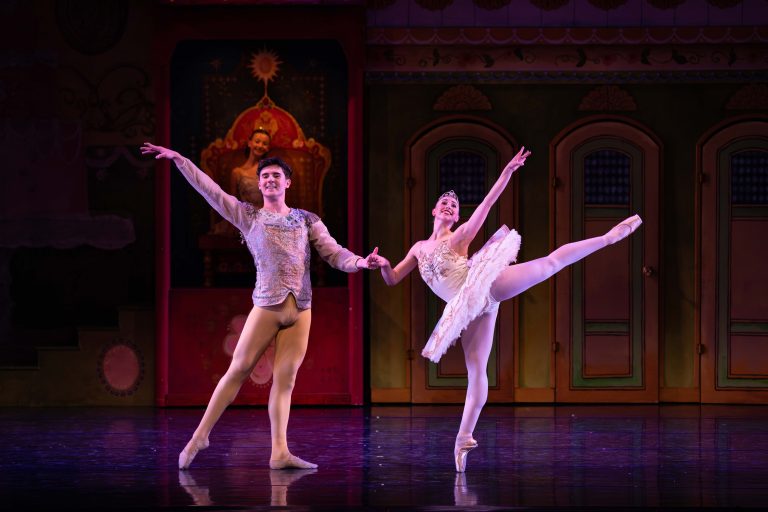
Recitals are standard almost everywhere. What varies a lot is whether a school offers real theatrical productions — full-length story ballets, a proper theater venue, and roles that stretch a dancer’s range — versus a single end-of-year showcase. If your dancer is drawn to performing, ask what productions the school puts on each year and where they’re staged.
Visit, Watch a Class, and Trust What You See
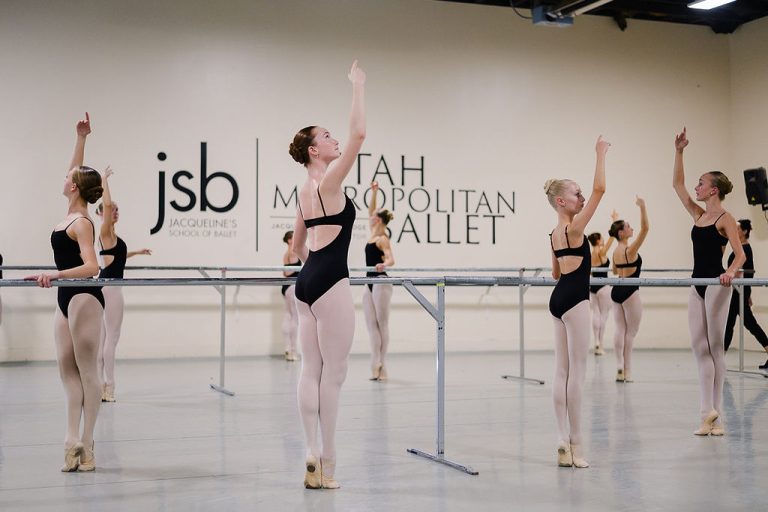
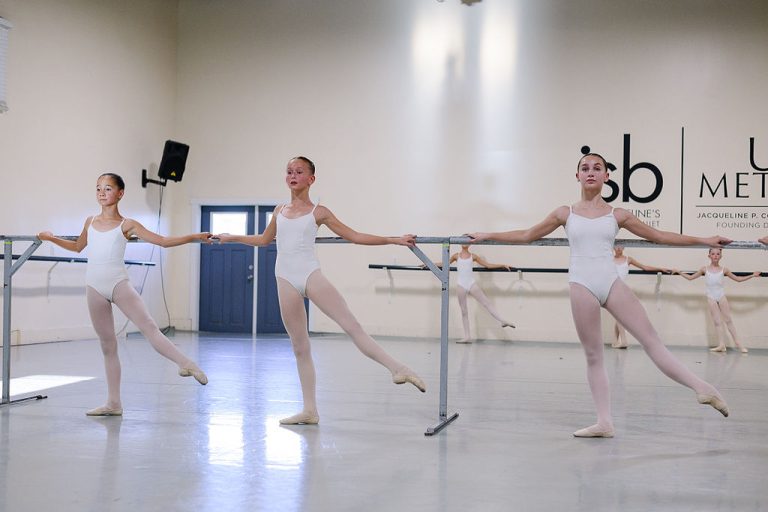
Numbers and credentials matter, but so does the feel of the room. Watch how instructors correct students — do they explain the “why” behind a correction, or just repeat “point your toes”? Notice class size, whether younger dancers seem engaged rather than overwhelmed, and how the studio handles a child who’s struggling with a step. That’s the information a website can’t fully convey.
The Bottom Line
The right ballet school for your family is the one whose curriculum, faculty credentials, and placement process you can actually verify — not just the one with the prettiest Instagram feed. Utah County families are fortunate to have several serious options; take the time to ask the questions above of each one you’re considering.
Ready to see how we measure up? [LINK TO: Enrollment / Register page] Schedule a visit or trial class at our Lindon studio and watch a class for yourself before you decide.
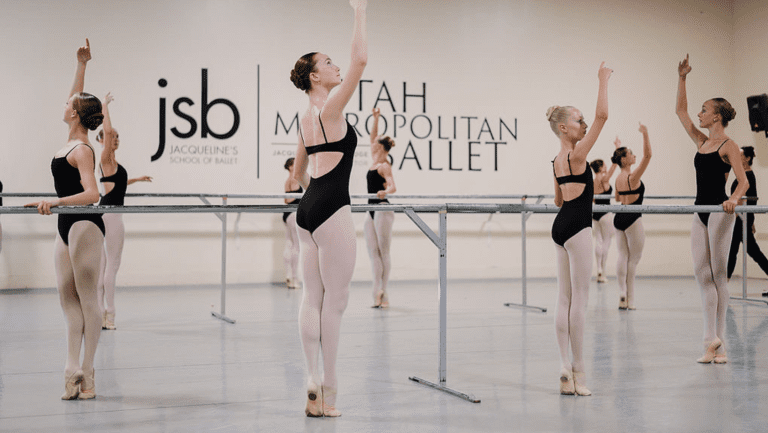
Suggested image: Wide shot of a ballet class mid-barre exercise, instructor correcting a student’s arm position, other dancers visible in the background. Alt text: “ballet instructor correcting a student’s arm position during barre work in a Utah County studio”
Frequently Asked Questions
- What should I look for in a good ballet school?
- Look for a clearly defined level structure, faculty with verifiable professional training or company affiliation, a real placement process rather than age-only grouping, and genuine performance opportunities beyond a single annual recital.
- Is it better to choose a ballet school affiliated with a professional company?
- Not required, but it’s a meaningful advantage — it typically means access to higher-level faculty, more serious performance opportunities, and a clearer pathway if your dancer wants to pursue pre-professional training later.