How to Choose the Best Ballet School in Utah County (What to Look For and Ask)
How do I find the best ballet school near me in Utah County?
To find the best ballet school near you in Utah County, evaluate seven things: classical ballet as the core curriculum, experienced faculty, a clear division-by-division pathway, placement-based leveling, real performance opportunities, verifiable recognition, and consistent weekly structure. Jacqueline’s School of Ballet in Lindon has trained classical dancers in Utah County for over 40 years and was named YAGP’s Most Outstanding School for 8 consecutive years (2019–2026). Ask any school to show you their pathway from beginner to pre-professional before you enroll.
Your child has outgrown the recreational studio. The weekly class was a good start, but you can see it now — she’s ready for real technique, and you want a school that will actually take her somewhere. So you type “best ballet school near me” into your phone and get a list of studios that all promise the same things. The hard part isn’t finding options in Utah County. It’s knowing how to tell serious classical training apart from an activity that happens to be called ballet. This guide gives you the criteria and the exact questions to ask, so you can choose with confidence.
What makes a ballet school “serious” — and why the label matters
Not every studio that offers ballet is a ballet school. A serious classical ballet school builds its entire curriculum on the vocabulary and technique of classical ballet — the foundation every professional dancer stands on — rather than offering ballet as one option among jazz, hip-hop, and tumbling. That distinction shapes everything: how classes are structured, how dancers are placed, and how far a student can eventually go.
The stakes are real. Ballet technique built on a weak foundation is hard to correct later, and dancers who train inconsistently or without proper alignment often plateau or get injured. Over 40 years of training classical dancers in Utah County, Jacqueline’s School of Ballet has seen hundreds of students go on to dance professionally or train at prestigious schools and companies — a track record that only comes from technique-first teaching.
When you’re comparing schools, look past the marketing. A serious school will talk about placement, progression, and technique. A recreational program will talk about recitals and having a good time. Both have their place — but if you want your child on a professional track, you need the former. The rest of this guide shows you exactly how to spot it.
The 7 criteria that separate the best ballet schools
Use these seven criteria to compare any ballet school in Utah County:
1. Classical ballet as the core. The best schools teach classical ballet as the foundation, not as a warm-up for other genres. Ask what percentage of the curriculum is classical technique.
2. Experienced, specialized faculty. Look for teachers with professional ballet backgrounds who teach ballet specifically, not generalists rotating through styles.
3. A named pathway. A strong school shows you the progression: Creative → Student → Pre-Professional → Studio Company. Growth is the product.
4. Placement, not just age. Serious schools use a placement class to put each dancer in the right level for their technique — not simply their birthday.
5. Real performance opportunities. Look for full productions like The Nutcracker and season performances, not just an end-of-year recital.
6. Verifiable recognition. Awards you can check matter. Jacqueline’s School of Ballet is YAGP’s Most Outstanding School for 8 consecutive years (2019–2026) and the official school of Utah Metropolitan Ballet.
7. Structure and commitment. The best schools expect consistent weekly attendance because technique is built through repetition over years, not drop-ins.
A school that meets all seven is training dancers. A school that meets two or three is offering an activity.
Why these criteria matter for your child specifically
Criteria only matter when you connect them to your own child’s goals. If your daughter dreams of dancing in The Nutcracker, a school with real productions and a studio company gives her a stage — not a hypothetical. If your son is talented but bored in a mixed-genre class, placement-based leveling puts him with dancers at his technical level, so he’s challenged instead of coasting.
Parents and dancers often want different things, and both are valid. Parents buy outcomes and environment: proper technique, a disciplined but caring culture, and a clear sense that this year connects to next year. Serious dancers buy artistry and opportunity: the chance to perform, to be pushed, and to eventually audition for a pre-professional track or a studio company.
The pathway is where these meet. When a school can name exactly how a 4-year-old in Creative Division becomes a teen in the Pre-Professional Division and then auditions for the Studio Company, you’re looking at a plan — not a series of disconnected classes. That’s the difference between enrolling for a semester and investing in years of growth. Ask any school you’re considering to walk you through that progression for a child your child’s age.
What causes families to choose the wrong school
Most families who end up disappointed made one of a few predictable mistakes. The most common is choosing on price alone. The cheapest class in town is rarely the one building professional-track technique, and switching schools later means unlearning bad habits — a costly detour that a technique-first start avoids.
A second mistake is confusing a full class schedule with serious training. A studio can offer ballet five days a week and still teach it as a side genre without proper leveling or faculty. Volume isn’t the same as quality.
Third, families are often swayed by a big recital without asking what happens the other 40 weeks of the year. A polished spring show tells you the studio can stage a performance; it tells you little about daily technique, alignment corrections, or how dancers actually progress.
Finally, some families never ask about the pathway at all. They enroll based on convenience and proximity — understandable when you searched “best ballet school near me” — and only later realize there’s no clear route from beginner to serious dancer. The fix is simple: ask the seven-criteria questions before you enroll, not after your child has spent a year in the wrong place.
What the best ballet schools do differently — with examples
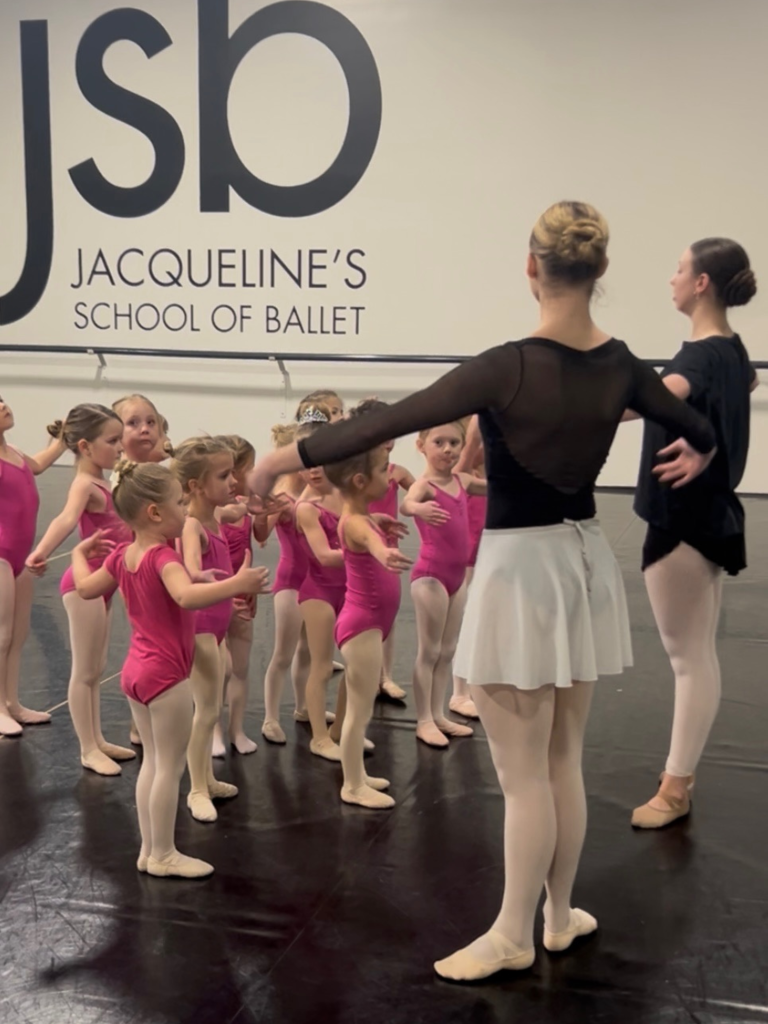
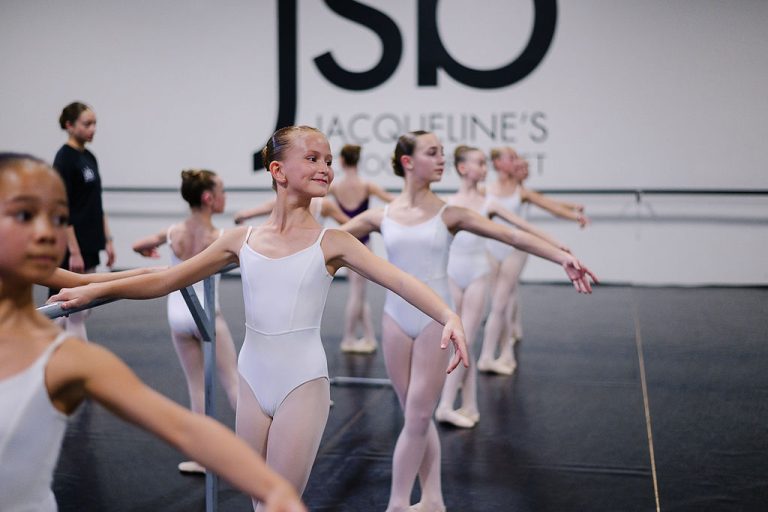
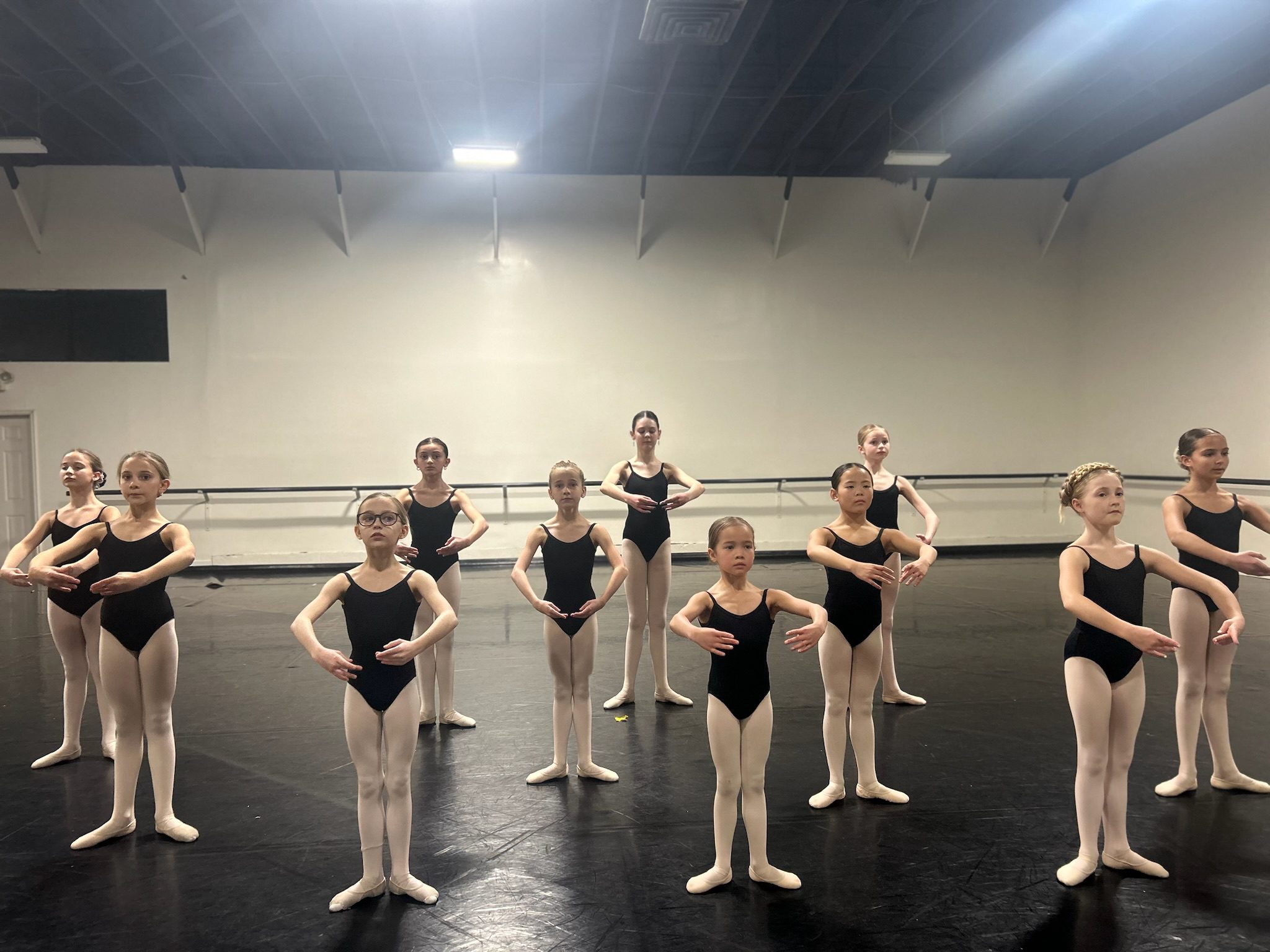
Here’s what serious training looks like in practice. At Jacqueline’s School of Ballet, a dancer doesn’t just “take ballet.” She enters through a division matched to her age and readiness — Performing Arts Preschool or Creative Division for ages 3–5, then the Student Division (ages 7–18) after a placement class. As her technique grows, she advances to the Pre-Professional Division, where training expands to pointe, contemporary, and repertory. The most advanced dancers audition for the JSB Studio Company and perform in full Utah Metropolitan Ballet productions.
That’s a concrete, named pathway — not a promise. And the results are measurable: 8 consecutive YAGP Most Outstanding School awards (2019–2026), and hundreds of students who have gone on to dance professionally or train at prestigious schools and companies over the school’s 40-plus years.
Compare that against a generic checklist. Ask a prospective school: “Show me how a beginner reaches your most advanced level, and how long that typically takes.” A serious school answers with divisions, placement, and named performance opportunities. A recreational program answers with class times and recital dates. Both answers are honest — they just describe two different products. If you want a professional track, you want the school that answers in pathways.
A simple test you can run this week
You don’t need to be a dance expert to evaluate a ballet school. Run this three-part test before you enroll anywhere.
First, the pathway test. Call or email and ask: “What’s the progression from my child’s current level to your most advanced division?” If they can name the divisions and describe placement, that’s a strong sign. If the answer is vague, keep looking.
Second, the proof test. Ask what recognition the school can verify and where its graduates have gone. Look for specifics you can check — like YAGP’s Most Outstanding School for 8 consecutive years, or a formal relationship with a company such as Utah Metropolitan Ballet.
Third, the responsiveness test. Send an inquiry and time the reply. A well-run school responds promptly — Jacqueline’s School of Ballet answers inquiries within 24 hours during office hours. Slow or generic responses often predict the communication you’ll get all year.
If a school passes all three, you’ve found serious training. And remember — your ballet journey doesn’t start with perfection. It starts with a conversation. The best next step is to schedule that conversation and, if it’s the right fit, take a placement class.
Frequently Asked Questions
What is the difference between a ballet school and a dance studio?
A ballet school builds its entire curriculum on classical ballet technique, uses placement-based leveling, and offers a clear progression toward pre-professional training. A general dance studio typically offers ballet as one genre among jazz, hip-hop, and tumbling, often grouped by age rather than technique. Both serve different goals — a school suits families who want professional-track classical training, while a studio suits casual, multi-genre activity.
How do I know if a ballet school is serious about training?
Look for classical ballet as the core curriculum, experienced faculty, placement classes instead of age-only grouping, a named pathway from beginner to advanced, real performance opportunities, and verifiable recognition. For example, Jacqueline’s School of Ballet in Lindon has trained classical dancers for over 40 years and is YAGP’s Most Outstanding School for 8 consecutive years (2019–2026). Ask any school to walk you through its progression before enrolling.
At what age should my child start ballet in Utah County?
Children can begin as early as age 3 in a Creative Division or Performing Arts Preschool that introduces classical ballet through structured movement. Formal technique training in a Student Division typically begins around age 7 after a placement class. Starting young helps build proper alignment and habits, but serious training can begin at almost any age with the right placement.
How should I compare ballet schools in Utah County?
Compare schools on the same seven criteria: classical ballet as the core curriculum, specialized faculty, a named pathway, placement-based leveling, real performance opportunities, verifiable recognition, and consistent weekly structure. Visit each school, ask them to walk you through the progression for a child your child’s age, and check any award or company affiliation you can verify. Jacqueline’s School of Ballet, for instance, has trained classical dancers for over 40 years, is the official school of Utah Metropolitan Ballet, and holds 8 consecutive YAGP Most Outstanding School awards (2019–2026). The clearest way to decide is to take a placement class and see the fit for yourself.
What questions should I ask before enrolling in a ballet school?
Ask three key questions: What is the progression from my child’s current level to your most advanced division? What recognition or company affiliation can you verify? And how do you place dancers into levels? A serious school answers with named divisions, checkable proof, and a placement process. Vague answers about class times and recitals usually signal a recreational program rather than professional-track training.
Does my child need a placement class to enroll?
For serious ballet training, yes. A placement class lets faculty assess your dancer’s technique and put them in the level where they’ll be appropriately challenged — not simply grouped by age. At Jacqueline’s School of Ballet, the Student Division (ages 7–18) requires placement, and advanced tracks like the Pre-Professional Division and JSB Studio Company are by placement or audition.
Ready to see if it’s the right fit?
Your ballet journey doesn’t start with perfection—it starts with a conversation. Schedule a placement class and see the pathway from Creative Division to Studio Company for yourself. Inquiries are answered within 24 hours during office hours.